
Stand at the top of Snake Pass in the heart of the Peak District and you’ll see a narrow ribbon of tarmac set in some of the most striking landscape Britain has to offer.
What you won’t see is a road that is fit to connect two major cities in a modern, G7 economy. It’s narrow, twisty, and sections of it spend much of the year trying to subside down the nearest hillside.
Unfortunately, thanks to decades of chronic underinvestment, this is indeed the most direct road route between Manchester and Sheffield. At best, motorists face a drive of over 90 minutes to cover just 38 miles. At worst, it’s completely shut. These are the only two top-ten cities in the UK without a direct motorway or dual-carriageway connection, the biggest gap in the nation’s transport network.
Fixing this paucity of cross-Pennine connections should be a national priority. It would allow Manchester and Sheffield to operate as one economy that can access a wider pool of labour across the North, unlocking billions of pounds of growth in a region that desperately needs it
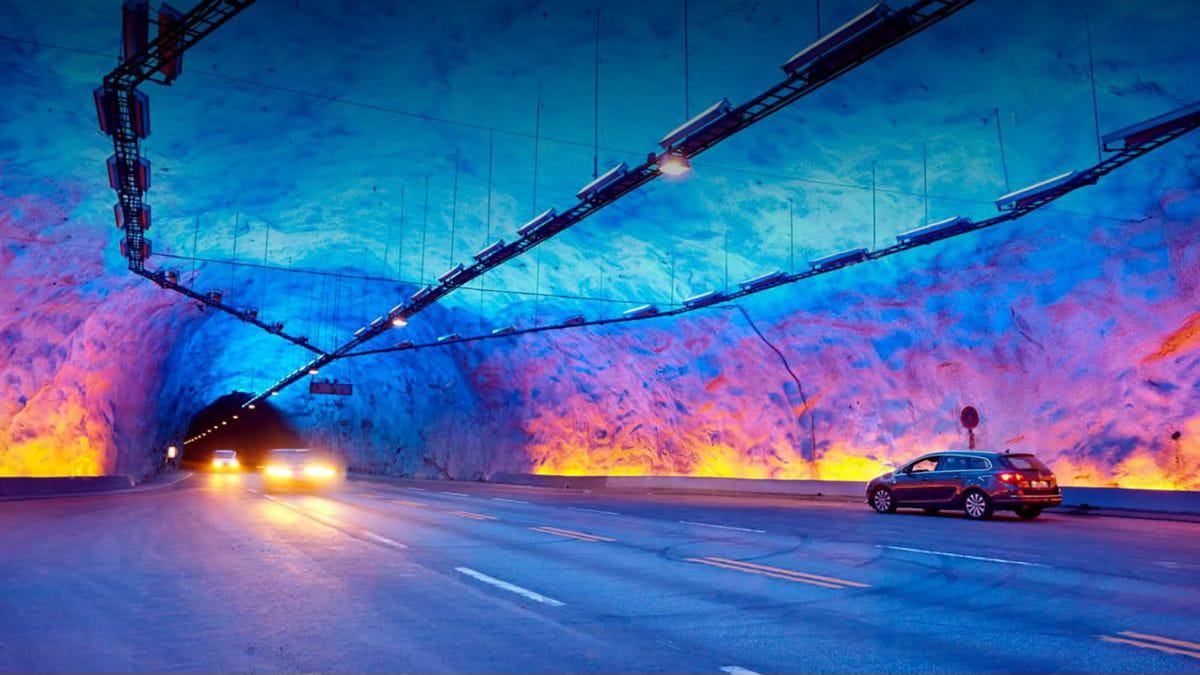
Building a big new road straight over vital natural habitats in a National Park is obviously a non-starter. But what about a road going under it? In 2015, the Department for Transport looked at the idea of a tunnel, but baulked at the price – an estimated £10bn.
That’s where Future Works, a infrastructure development startup, comes in. In July, we launched TransPennine Connect, a project to build a 14km tunnel under the Peak District for up to 90% less than the DfT estimate, restore natural habitats across the National Park, and reopen a disused cross-Pennine railway into the bargain.
How can we reduce the construction cost by such a massive margin? The DfT analysis, which I participated in as a civil servant, had a fatal flaw. It assumed the use of expensive tunnel boring machines. This is a suitable approach for the soil and soft rock found across much of the UK, especially in the south. But, the Pennines sits on hard rock, which means we can use the much cheaper ‘dig and blast’ technique – essentially a series of small, controlled explosions to clear away the rock along the proposed route. The natural strength of the rock then holds up the roof, aided by steel bolts and sprayed concrete.
This isn’t new or untried technology. It has been used to build more than a thousand tunnels in Norway, some of them much longer than our proposed route. And, it has done it for an equivalent cost of tens or hundreds of millions, rather than billions of pounds.
This is a link worth building, and worth using: a lorry driving this route rather than the M62 would save 20 litres of diesel or more. That saving protects the environment and provides the bedrock for project funding.
It also provides the opportunity to do more than just speed up traffic. If we can remove the vehicles from the surface, we can close non-essential sections of the road and return the land to nature.
And the unusual circumstances open up an opportunity that has been under discussion for 40 years – restoring the Woodhead railway line into use. In 1954 this was the most modern railway in the north, but by the 1980s it was shut. We think that the construction of a road tunnel tips the balance in favour of restoration, and have incorporated it into our project.
This is truly a win-win for the region – faster, more reliable journeys by road and rail for ordinary people, and enhanced natural habitats in some of Britain’s most beautiful places. And, we reckon that with a fair political wind it can be delivered relatively quickly, unlike other ill-fated UK infrastructure projects that we could mention.
We are in the process of speaking to local people, politicians, and potential investors for this project. The reaction so far has been extremely positive. There is an awareness that this route is desperately needed, and that there’s no time like the present to get started. Our priority now is to build support across these key stakeholder groups, and work with local communities to make sure we deliver the best possible plan for the people who will use it the most.
It’s an ambitious project, not because of the technology used, but because it offers a route to a very different Britain. One where modern infrastructure isn’t vastly expensive or non-existent. One where the needs of local communities are heard and answered, and where growth and nature can win together. One that considers new ways of delivering opportunity and growth to every region, and breaks us out of our current stagnation.
We have many LFG members to thank for their individual contributions to the work so far. If you’d like to be part of that, please get in touch – we’ve got a mountain to move.
Michael Dnes is the co-founder of Future Works, and Head of Transport Policy at Stonehaven and Public First. Previously, he worked for almost 20 years at the Department for Transport.